
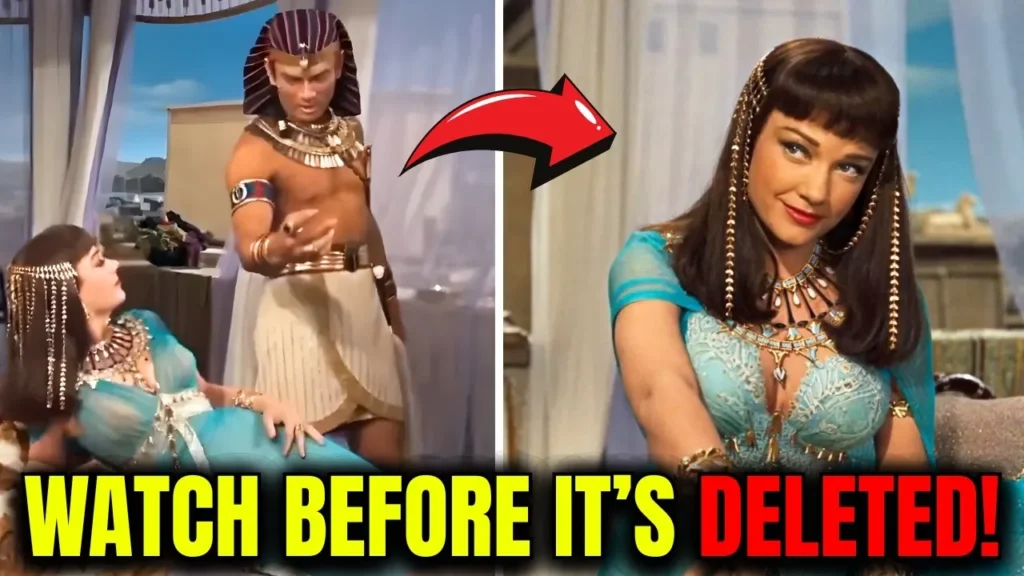
One of Hollywood’s greatest epics, The Ten Commandments (1956) by Cecil B. DeMille, is a colossal picture praised for its grandeur, moral storyline, and memorable performances by Anne Baxter, Yul Brynner, and Charlton Heston. However, behind the film’s revered narrative and magnificent imagery, there were scenes that were captured on camera but later kept secret, which few viewers were ever aware of.
Production historians claim that during editing, a number of “forbidden scenes” were changed or eliminated completely. These included portrayals deemed too graphic or powerful for 1950s viewers. For instance, to conform to the conservative norms of the time, several scenes depicting Egyptian extravagance and luxury—such as dancers, sumptuous feasts, and symbolic images of temptation—were toned down.
A more emotionally charged interaction between Moses and Nefretiri, when their chemistry veered toward the amorous rather than merely theatrical, was the subject of another suspected cut. According to reports, DeMille believed this ran the risk of overpowering the movie’s religious theme.
At the time, these moments were considered too bold for a religious epic, even if none of them were obscene by today’s standards. Hollywood’s stringent moral standards and DeMille’s delicate balancing act between art and reverence were both represented in these decisions.
The enigma surrounding these “forbidden scenes” only serves to strengthen the movie’s lasting appeal today. Both for what viewers witnessed on film and for what was left up to their imagination, The Ten Commandments is still regarded as a masterpiece.